
Mayan Art
Art of the Mayan Empire
Kings of Palenque, a feathered serpent, the god of corn and the Maya calendar: Mayan art finished by hand in silver in our Mexico City workshop, much of it set into dark stone so that every figure and glyph catches the light.
Pieces from $3,220 to $23,800 MXN
No piece matches these filters.

Replica of the Head Sculpture of K'inich Janaab Pakal
$21,540.00 MXN
VAT included · Free shipping in Mexico

Replica of the Kʼinich Janaab Pakal Head Figure
$7,740.00 MXN
VAT included · Free shipping in Mexico

Small Silver Sculpture of Chac Mool
$6,520.00 MXN
VAT included · Free shipping in Mexico

Mayan Silver Head Figure
$7,740.00 MXN
VAT included · Free shipping in Mexico

Toltec Vase Silver Woman Aztec Art
$7,460.00 MXN
VAT included · Free shipping in Mexico

Yum Caax, Mayan God of corn.
$14,040.00 MXN
VAT included · Free shipping in Mexico

Silver Mayan Hieroglyphics Relief
$3,220.00 MXN
VAT included · Shipping $400 MXN

Circular Stone Silver Relief of Mayan Glyphs
$10,800.00 MXN
VAT included · Free shipping in Mexico

Mayan King Crown with Silver Face
$7,520.00 MXN
VAT included · Free shipping in Mexico

Silver relief of the Mayan calendar
$3,220.00 MXN
VAT included · Shipping $400 MXN

Seated Mayan King Relief Figurine
$3,220.00 MXN
VAT included · Shipping $400 MXN

Slave of Time - Mayan Relief
$3,220.00 MXN
VAT included · Shipping $400 MXN

Mayan Birdman Relief
$3,220.00 MXN
VAT included · Shipping $400 MXN

Silver Bird Jaguar Relief
$3,220.00 MXN
VAT included · Shipping $400 MXN

Pacal the Great
$4,800.00 MXN
VAT included · Shipping $400 MXN

Mayan Silver King Relief
$4,800.00 MXN
VAT included · Shipping $400 MXN

Silver relief of the Mayan King
$4,800.00 MXN
VAT included · Shipping $400 MXN

Silver Relief of the Mayan King Accepting the Offering
$3,220.00 MXN
VAT included · Shipping $400 MXN

Kukulkan, Silver Feathered Serpent Relief
$3,220.00 MXN
VAT included · Shipping $400 MXN

Mayan Conqueror King Under the Stars - Silver Relief
$9,760.00 MXN
VAT included · Free shipping in Mexico

Relief of the head of the Mayan priest Quetzalcoatl
$3,220.00 MXN
VAT included · Shipping $400 MXN

Silver Relief of the Hieroglyphics of the Mayan King
$3,220.00 MXN
VAT included · Shipping $400 MXN
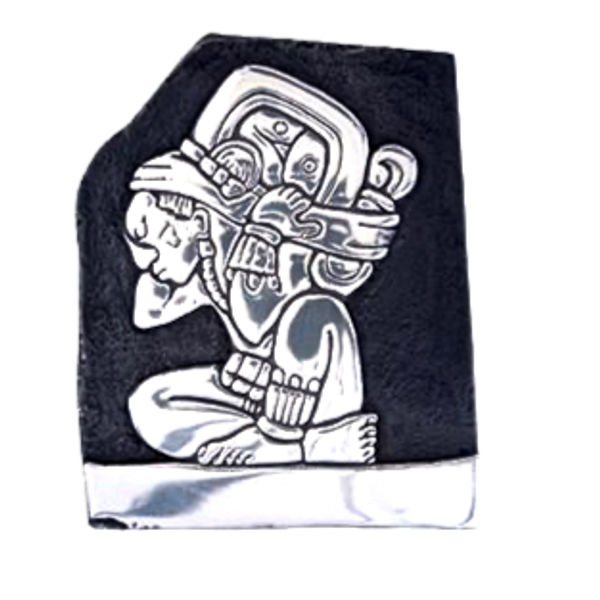
Mayan Commoner Working Silver Relief
$3,220.00 MXN
VAT included · Shipping $400 MXN
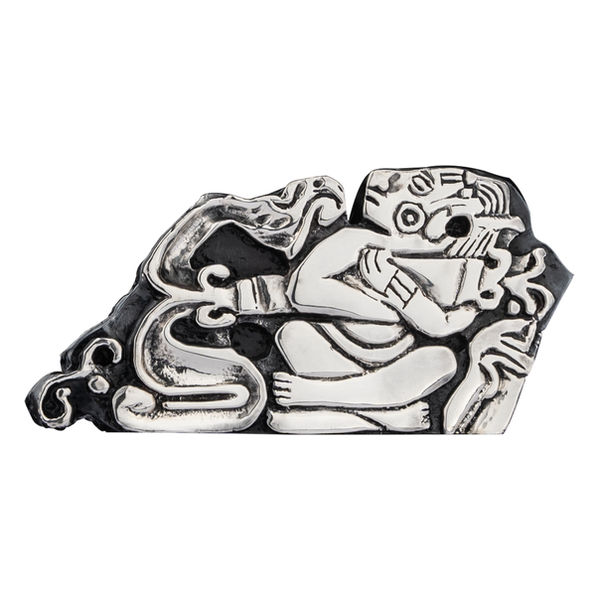
Mayan Silver Relief
$3,220.00 MXN
VAT included · Shipping $400 MXN

Silver Relief of the Hieroglyphics of the Mayan King
$3,220.00 MXN
VAT included · Shipping $400 MXN

Chinkultic Maya Ballgame Marker
$9,760.00 MXN
VAT included · Free shipping in Mexico

Mayan Silver Head Sculpture
$23,800.00 MXN
VAT included · Free shipping in Mexico
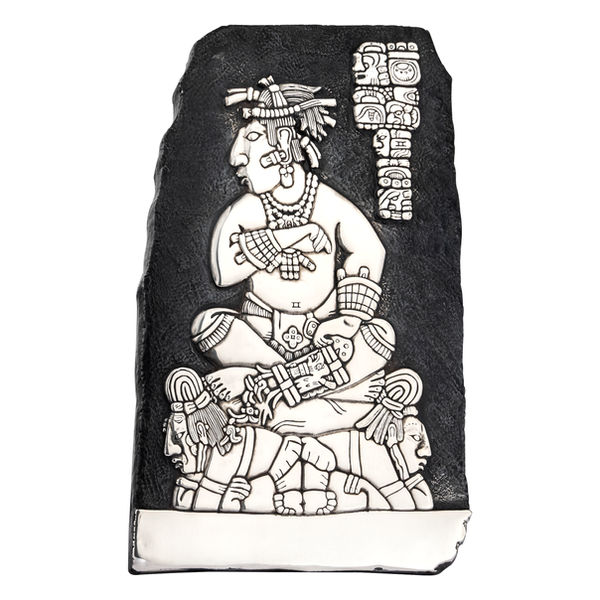
Silver Relief of Subordination to the Mayan King
$7,520.00 MXN
VAT included · Free shipping in Mexico

Silver sculpture of a seated Mayan man
$4,800.00 MXN
VAT included · Shipping $400 MXN

Pre-Hispanic Mayan man
$8,980.00 MXN
VAT included · Free shipping in Mexico

K'inich Janaab' Pakal - Silver Mayan Head
$10,320.00 MXN
VAT included · Free shipping in Mexico

K'inich Janaab' Pakal Head Replica
$10,320.00 MXN
VAT included · Free shipping in Mexico
Pakal, the king of Palenque
K'inich Janaab' Pakal, known as Pakal the Great, ruled Palenque, in Chiapas, in the 7th century. His tomb inside the Temple of the Inscriptions was found in 1952, together with its carved sarcophagus lid, and a stucco portrait head discovered there is now in the National Museum of Anthropology.
K'inich Janaab Pakal - Silver Mayan Head Statue and its larger companion render the king in bright silver, some with the tall, swept-back headdress, raised on tapered pedestals of dark stone. On a desk or in a bookcase the face seems lit from within against the stone below. The Sarcophagus Lid of the Maya ruler of Pakal the Great completes the story with the carved lid of his tomb, and a silver relief shows Pakal seated as king.
Silver against dark stone
Most of these pieces are silver panels set into rough, dark stone slabs with broken natural edges, so that figures and glyph blocks stand out against black. The Mayan King Accepting Offering Silver Relief shows a seated ruler in profile under a feathered headdress, while other reliefs turn to myth and work: a bird-man, a commoner bent to his task. Kukulkan, The Feathered Serpent Relief lifts the serpent's body up a vertical panel.
Kukulkan is the feathered serpent of the Yucatec Maya, related to Quetzalcoatl; at Chichén Itzá, the equinox light draws a serpent down the stairway of El Castillo. The Small Silver Chac Mool Statue reclines on a dark base, knees raised. Yum Caax, Mayan God of Corn, is the exception to the stone: a cut-out silver figure that stands on its own.
Glyphs, calendars and the ballgame
Maya writing combined word signs and syllables, carved in glyph blocks, and three round pieces carry it. The Haab Mayan Calendar Sculpture in Silver rings its centre with glyph cartouches; the Haab was the Maya 365-day calendar of 18 months of 20 days, plus five days. A circular glyph stone leaves its centre open, and the Maya Ballcourt marker from Chinkultic Replica recalls the carved markers of Maya ballcourts, from a site in Chiapas.
A Mayan calendar replica says a great deal in a small space, which makes these discs some of the most meaningful Mayan gifts in the collection. Beyond these Mayan statues, our Aztec art, Prehispanic Mexican art and Aztec calendar pages continue the story with the Mexica and the Toltecs.
Frequently asked questions
What is a Chac Mool?
A reclining figure with its head turned to one side and a vessel or plate resting on its belly, known from Chichén Itzá and from Tula. Our small silver chac mool statue keeps that pose on a dark base, knees raised, at a scale made for a desk or a shelf.
Which piece suits a desk, and which a wall or a niche?
The Pakal heads on their tapered pedestals and the reclining Chac Mool are made for a desk or a shelf. The reliefs set in stone and the round calendar discs read well in a niche or on a stand at eye level, where the light can cross the silver.
How is a silver relief set in stone looked after?
The silver is protected by a resistant lacquer, so a soft, dry cloth is all it needs; metal polish and cleaning agents are best avoided. Every piece carries our lifetime guarantee covering manufacturing defects, and we ship throughout Mexico from Mexico City.