

Elite artist
Architect Pedro Ramírez Vázquez
Pedro Ramírez Vázquez gave modern Mexico its face. The National Museum of Anthropology, the Estadio Azteca, the Basilica of Guadalupe and the Legislative Palace of San Lázaro all came from his drawing board, and in 1968 he led the organizing committee that brought the Olympic Games to Mexico City.
Architect, designer and teacher, he believed that a well-made object could carry a whole culture. The sculptures in this collection were created together with him, in his lifetime, and are finished by hand in silver, 24-karat gold and copper.
Created with the architect, in his lifetime
Pieces from $9,240 to $72,260 MXN
No piece matches these filters.
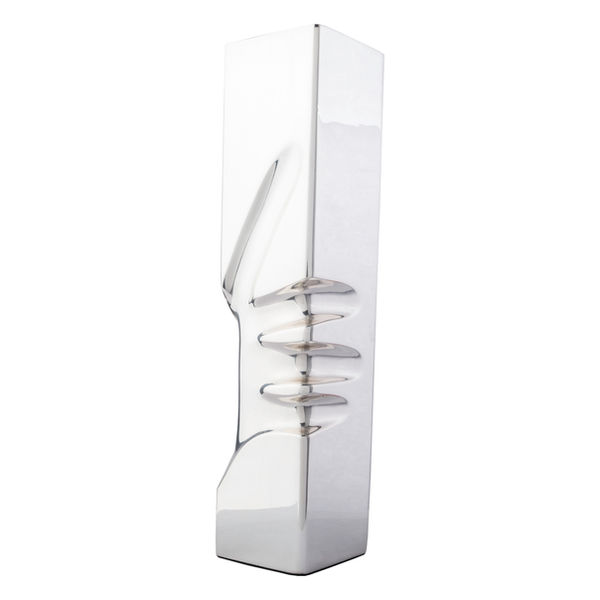
Silver Candle Holder - Prism in Hand
$21,040.00 MXN
VAT included · Free shipping in Mexico

Silver Frog Sculpture - Cueyatl
$31,940.00 MXN
VAT included · Free shipping in Mexico

Medium Silver Frog Sculpture - Cueyatl
$21,040.00 MXN
VAT included · Free shipping in Mexico

Small Silver Frog - Cueyatl
$13,100.00 MXN
VAT included · Free shipping in Mexico

Silver Parrot Sculpture - Toznene Small
$9,240.00 MXN
VAT included · Free shipping in Mexico

Silver Turtle Sculpture - Ayoltl
$21,040.00 MXN
VAT included · Free shipping in Mexico

Silver Singing Penguins Sculpture
$31,940.00 MXN
VAT included · Free shipping in Mexico

Silver Parrot Sculpture - Toznene
$31,940.00 MXN
VAT included · Free shipping in Mexico

Silver Abstract Parrot Sculpture - Toznene
$31,940.00 MXN
VAT included · Free shipping in Mexico

Little Silver Mezcala Man Sculpture
$21,040.00 MXN
VAT included · Free shipping in Mexico

Faceted Cross
$21,040.00 MXN
VAT included · Free shipping in Mexico

Disorder Silver Sculpture
$66,720.00 MXN
VAT included · Free shipping in Mexico

Bearded Face Sculpture
$21,040.00 MXN
VAT included · Free shipping in Mexico

Silver Twisted Column Sculpture
$66,720.00 MXN
VAT included · Free shipping in Mexico

Mezcala Silver Human Sculpture
$66,720.00 MXN
VAT included · Free shipping in Mexico

Silver Duck Sculpture - Canauhtli
$21,040.00 MXN
VAT included · Free shipping in Mexico

Tall Mezcala Silver Human Sculpture
$66,720.00 MXN
VAT included · Free shipping in Mexico

Replica of the Mexican Origins Column from the Anthropology Museum
$66,720.00 MXN
VAT included · Free shipping in Mexico

Silver Kissing Heads Sculpture
$31,940.00 MXN
VAT included · Free shipping in Mexico

Silver Torero Sculpture
$21,040.00 MXN
VAT included · Free shipping in Mexico

Coatl - Silver Snake Sculpture
$21,040.00 MXN
VAT included · Free shipping in Mexico

Kauayo Silver Horse Figurine
$13,100.00 MXN
VAT included · Free shipping in Mexico

Square Mezcala Silver Human Sculpture
$66,720.00 MXN
VAT included · Free shipping in Mexico

Silver Cross on a Rock
$72,260.00 MXN
VAT included · Free shipping in Mexico

Silver Sculpture in Motion
$21,040.00 MXN
VAT included · Free shipping in Mexico

Silver Elephant Sculpture by Pedro Ramírez Vázquez
$13,100.00 MXN
VAT included · Free shipping in Mexico

Silver Fish Sculpture by Pedro Ramírez Vázquez
$21,040.00 MXN
VAT included · Free shipping in Mexico

Kissing Heads Sculpture
$31,940.00 MXN
VAT included · Free shipping in Mexico

Large Silver Lion Head Sculpture
$21,040.00 MXN
VAT included · Free shipping in Mexico

Copper Penguin Sculpture - Totontli
$23,560.00 MXN
VAT included · Free shipping in Mexico

Silver Horse Head Figurine by Pedro Ramírez Vázquez
$13,100.00 MXN
VAT included · Free shipping in Mexico

Silver Matatena by Pedro Ramírez Vázquez
$9,240.00 MXN
VAT included · Free shipping in Mexico

Silver Bear Figurine
$9,240.00 MXN
VAT included · Free shipping in Mexico

Copper Skull Figure Tzompantli by Pedro Ramírez Vázquez
$11,620.00 MXN
VAT included · Free shipping in Mexico

Kanahutli Silver Duck Sculpture
$9,240.00 MXN
VAT included · Free shipping in Mexico

Large Silver Bear Figurine
$13,100.00 MXN
VAT included · Free shipping in Mexico

Silver Lion Head Sculpture
$9,240.00 MXN
VAT included · Free shipping in Mexico

Gold Penguin Sculpture - Totontli
$41,580.00 MXN
VAT included · Free shipping in Mexico

Totolli Silver Rooster Figurine by Pedro Ramírez Vázquez
$13,100.00 MXN
VAT included · Free shipping in Mexico

Gold Tzompantli Skull
$20,490.00 MXN
VAT included · Free shipping in Mexico

Gold Tzompantli Skull by Pedro Ramírez Vázquez
$20,490.00 MXN
VAT included · Free shipping in Mexico

Copper Tzompantli Sculpture
$11,620.00 MXN
VAT included · Free shipping in Mexico

Silver Tzompantli Sculpture
$13,660.00 MXN
VAT included · Free shipping in Mexico

Silver Totontli Sculpture
$27,720.00 MXN
VAT included · Free shipping in Mexico

Faceted Silver Tzompantli Sculpture
$13,775.00 MXN
VAT included · Free shipping in Mexico

Cueyatl Frog Sculpture in 24K Gold
$48,348.00 MXN
VAT included · Free shipping in Mexico
An architect for a whole country
He was born in Mexico City on 16 April 1919 and studied architecture at the National University (UNAM). In the late 1950s he designed a rural classroom that a community could build itself with local materials; thousands were raised across Mexico and abroad, and the design was awarded at the 1960 Milan Triennale.
In 1964 he opened two of the city's great museums: the National Museum of Anthropology, whose courtyard shelters under a vast concrete umbrella resting on a single column, and the Museum of Modern Art in Chapultepec. Two years later came the Estadio Azteca.
Mexico 68: the Games as a work of design
As president of the organizing committee of the 1968 Olympic Games, he treated the event as a single work of design: the Mexico 68 logotype, the signage, the colours that ran from the stadiums into the streets. Half a century later, that identity is still studied in design schools around the world.
He went on to build the new Basilica of Guadalupe (1976), which receives millions of pilgrims every year, and the Legislative Palace of San Lázaro (1981), and served as Mexico's Secretary of Human Settlements and Public Works from 1976 to 1982. He died in Mexico City on 16 April 2013, the day he turned 94.
His language, in silver and gold
He drew on the pre-Hispanic world all his life, and so do these pieces. Their names are Nahuatl: Tzompantli, after the Aztec skull rack, Totolli, Totontli, Ayoltl. They are compact, geometric forms, with the clarity of an architect who wanted every line to have a reason.
Each one was created together with Ramírez Vázquez in his lifetime and is finished by hand in our Mexico City workshop. A piece for your desk or your shelf, and a small part of the work of the architect who designed the image of modern Mexico.